The short answer
Movers vs DIY, honestly: the real all-in cost of a rental truck, when each genuinely wins, and the hybrid that often beats both.
The movers-versus-DIY decision comes down to four honest variables: total cost (not the sticker), your time, the physical risk, and the value of what you're moving. A rental truck looks dramatically cheaper until you add everything up — and the gap closes faster than most people expect. This guide runs the real numbers both ways, names the cases where each genuinely wins, and offers the hybrid that often beats both.
The Real DIY Cost (Not Just the Truck)
The truck rental is the headline; the total is the story:
- Truck rental: $40–$120/day advertised — before mileage, which many "cheap" rentals charge per mile.
- Fuel: box trucks get 8–10 mpg, and you return it full.
- Insurance: $25–$60/day (your auto policy almost never covers rental trucks — skipping it is the gamble that ends in a five-figure regret).
- Equipment: dollies, furniture pads, straps — rented or bought.
- Supplies + food: boxes, tape, and feeding the friends you recruited.
- Your time: 10–16 hours across packing, loading, driving, unloading, and returning the truck.
- The risk premium: damaged furniture, a gouged wall (there goes the deposit), or an injured back — all uninsured and entirely yours.
Add it up and a "$60 truck" DIY 2-bedroom move routinely lands at $300–$600 in hard costs plus your weekend and all the risk.
The Real Professional Cost
A written hourly quote with everything included — crew, truck, padding, equipment, basic assembly. At our rates ($149–$219/hr by crew size, 3-hour minimum, 15-minute increments), a 1-bedroom typically runs $447–$596 and a 2-bedroom $716–$1,074, door to door. No stair fees, and the damage risk shifts to the company's insurance, not your spine. For many apartment moves, the cash gap between DIY and pro is a few hundred dollars — and the gap in hours, risk, and Monday-morning soreness is the part people underprice.
When DIY Genuinely Wins
- Studios and dorm rooms with elevator access and friends who actually show up.
- Few belongings, nothing fragile or heavy — minimalist moves are made for DIY.
- Very short moves where several car trips beat renting a truck at all.
- Tight budget, flexible timeline — when you have more time than money and no stairs to fight.
When Professionals Genuinely Win
The full case — what a licensed crew does differently and the protection you're buying — is in why hire a professional moving company.
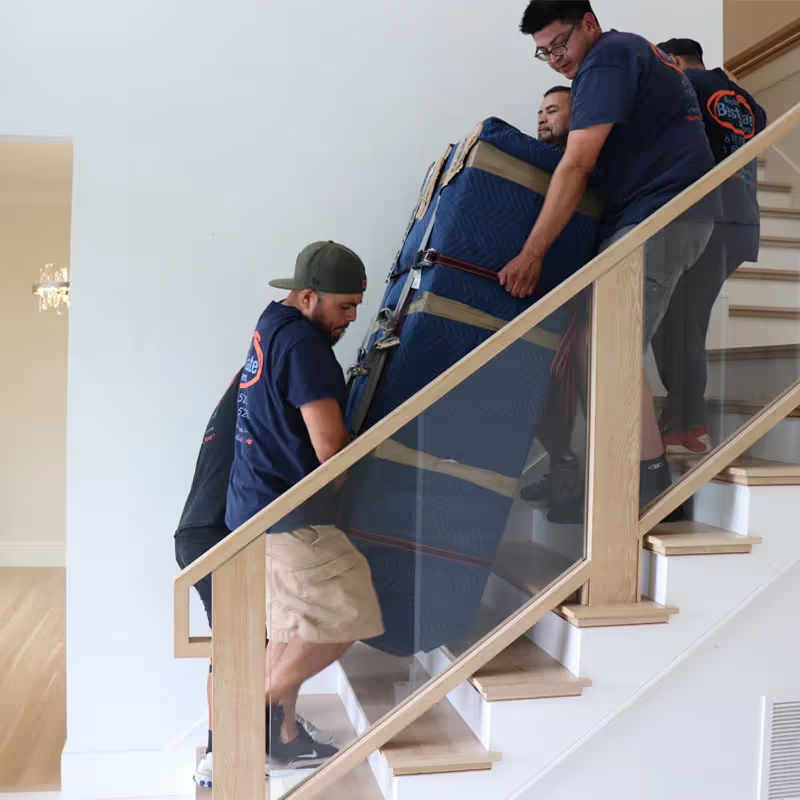
- Walk-ups and stairs — the Boston walk-up is the definitive pro case; technique and a no-stair-fee policy beat your weekend and your back.
- Heavy or high-value items — pianos, safes, antiques, appliances; one mistake costs more than the whole crew.
- Tight timelines — closings, lease deadlines, same-day moves leave no room for a U-Haul learning curve.
- Buildings with rules — COIs, elevator windows, loading docks; pros navigate these weekly.
- Long distance — driving a loaded truck hundreds of miles is a different risk class; our long-distance moves are hourly, never weight-based.
The Hybrid That Often Beats Both
The smartest budget structure for able-bodied movers with mostly non-fragile homes: you move the boxes, professionals move the furniture. A 2-mover crew inside the 3-hour minimum ($447) handles everything heavy, stair-hostile, and breakable while your friends and car handle the boxes. You keep protection where damage actually happens and skip paying crew rates to ferry book boxes. We'll even move a single heavy item.
Movers vs. DIY FAQ
Is it really cheaper to move myself?
For a small, simple, stairs-free move — yes. For a real household with furniture and stairs, the all-in DIY cost lands much closer to professional pricing than the truck sticker suggests, with all the risk on you.
What's the hidden cost people forget in DIY?
Insurance (skipped, then regretted), the value of 12+ hours of your time, and damage — to your stuff, the building, or your back.
How do I compare a pro quote fairly?
Get it in writing, all-in, and read how to choose a moving company so a lowball quote with hidden fees doesn't masquerade as the cheap option.
Run your own numbers, then get a free written quote to compare against the DIY math. 1,244+ Google reviews, 33,000+ moves, and an honest answer about whether you even need us.
Ready to hand the heavy lifting to pros? See our local movers in Boston service.
Find our moving guides faster on Google
Add Boston Best Rate Movers as a preferred source and Google shows our answers first when you search — including in AI Mode.

Boston Best Rate Movers
The Boston Best Rate Movers team shares moving tips, Boston neighborhood guides, and cost-saving strategies drawn from 24+ years and 43,126+ completed moves across Greater Boston.
See All Posts.avif)