If you're wondering how to move a gun safe without injuring yourself or wrecking your floors, you're asking the right question. These units are engineered to resist fire and forced entry, which makes them exceptionally dense and genuinely difficult to handle.
Before anything moves, it's worth understanding exactly what you're dealing with in terms of weight, construction, and the real risks that come with it.
Why Moving a Gun Safe Is More Complex Than Most People Think
Most people don't realize how much a gun safe weighs until they try to shift one. Small models start around 200 to 400 lbs, mid-size safes run 400 to 700 lbs, and large rifle safes can reach 1,200 lbs or more.
Weight alone isn't the whole problem. Gun safes are built with heavy-gauge steel bodies, composite fireboard insulation, and reinforced doors with internal bolt mechanisms. That construction creates a high center of gravity that makes the safe prone to tipping, even on flat ground. Controlling it during a move requires deliberate technique, not just brute strength.

Key Risks of Moving a Gun Safe Yourself
The injury risk from moving a gun safe is serious and well-documented. A safe that tips mid-move can cause crushing injuries in a matter of seconds. Back injuries are extremely common when people attempt to move heavy safes without proper lifting mechanics or adequate help. One wrong step on a staircase can make the situation unmanageable fast.
Property damage is an equally real concern. Hardwood floors can crack, gouge, or permanently indent under concentrated weight from a safe on a dolly. Stairwells can sustain structural damage if the load isn't properly supported and controlled. Door frames and walls are also vulnerable during tight turns in hallways.
There's also a mechanical risk that many people overlook. Gun safes contain precision locking systems, relockers, and internal bolt mechanisms that are sensitive to impact and jarring movement.
Improper handling can cause door misalignment that prevents the lock from functioning correctly, leaving you unable to open your own safe after the move. Professional gun safe movers are trained to handle these units specifically to avoid that kind of damage.
Equipment You'll Need to Move a Gun Safe
Planning to move a smaller safe yourself? The equipment requirements go well beyond what most people have in their garage. Here's what a proper DIY setup actually includes:
- A heavy-duty appliance dolly rated for at least 800 to 1,200 lbs with large pneumatic wheels
- Industrial-grade ratchet straps to secure the safe firmly to the dolly
- Moving blankets to protect the safe's finish and shield your walls during turns
- Gun safe moving sliders or plywood sheets laid across the floor to distribute weight and prevent gouging
- A loading ramp or lift gate for loading into a truck
- At least two to three strong helpers who can maintain control throughout the move
The equipment list alone signals why this isn't a casual weekend job. For safes that fall under 400 lbs, a single-item moving service is often a cost-effective alternative that removes the logistics entirely.
How to Move a Gun Safe: Basic Steps for Smaller Safes
These steps are intended for safes under 400 to 500 lbs on flat ground with proper equipment and adequate help. They're an overview, not a substitute for professional judgment.
- Empty the safe completely, including all firearms, ammunition, and removable shelving.
- Lock the door and tape or strap it shut so it won't swing open mid-move.
- Tip the safe carefully onto the dolly and secure it tightly with ratchet straps before moving.
- Move slowly with helpers spotting on both sides at all times.
- Keep the safe fully upright throughout the entire move. Never lay it on its side.
- Use a loading ramp or lift gate when loading into a vehicle, never try to hoist it by hand.
The best way to move a gun safe is slowly and deliberately, with every person in position before anything shifts. One rushed step can cause damage or injury that's very costly to undo.

How Professionals Move Heavy Gun Safes
Professional movers follow a structured process that begins well before the safe is touched. A proper job starts with a full site assessment that covers doorway clearances, stair load capacity, and floor surfaces along the entire route.
From there, the crew selects the right equipment for the specific job. Large safes typically require powered stair-climbing dollies, hydraulic lift gate trucks, safe skates, and pallet jacks. These aren't tools homeowners typically have access to, and they make a significant difference in how safely a heavy safe can be moved.
During transport, professionals keep the safe secured in the truck over the rear axle to minimize vibration and shifting. Internal components are stabilized before loading, and the safe's exterior is fully wrapped to protect both the finish and any surfaces it passes near.
Moving a Gun Safe Upstairs or Downstairs
This is where DIY attempts break down most often. Stairs shift the center of gravity in ways that are hard to control without specialized tools, and going downstairs is especially risky once momentum builds.
Professional movers use powered stair climbers, stair rollers, and winch systems to maintain controlled movement on every step. If your safe needs to travel up or down a staircase, it's one of the most common reasons Boston homeowners in triple-deckers and brownstones call on a residential moving team with specific safe-handling experience.
DIY vs. Professional Safe Moving

For safes over 500 lbs or any move involving stairs, the professional column wins across the board. The math changes quickly when you factor in the cost of a damaged floor, a medical bill, or a compromised locking mechanism.
How Much Does It Cost to Move a Gun Safe?
Safe moving cost varies based on weight, distance, stair access, and the complexity of the route. These are general estimates for most residential jobs:
Stairs, tight hallways, long carries from the truck, and same-day scheduling will all push costs higher. Commercial safe moves and high-security vault relocations fall into a separate category and typically require a custom quote.
The American Moving & Storage Association recommends collecting at least three estimates before booking any moving service to make sure you're getting fair, competitive pricing.
The cost of professional movers is almost always less than the cost of repairing gouged hardwood floors, a damaged locking mechanism, or a back injury that sidelines you for weeks.
When to Hire a Professional Safe Mover
Some situations make professional help the clear call:
- The safe weighs more than 500 to 600 lbs
- Stairs are involved, even just one flight
- Doorways or hallways are narrow along the route
- You're completing a long-distance relocation
- The safe needs to be bolted down or installed at the new location
- You don't have access to a heavy-duty dolly, ratchet straps, and a lift gate truck
If two or more of these apply to your move, the decision is straightforward. Hiring professionals isn't a luxury. It's the only option that covers your safety, your floors, and your safe's mechanical integrity.
Move Your Gun Safe the Right Way
Understanding how to move a gun safe gives you a clear picture of what the job actually involves. For most homeowners dealing with a full-size or large safe, the weight, the mechanical sensitivity, and the equipment requirements make professional help the obvious and safest choice.
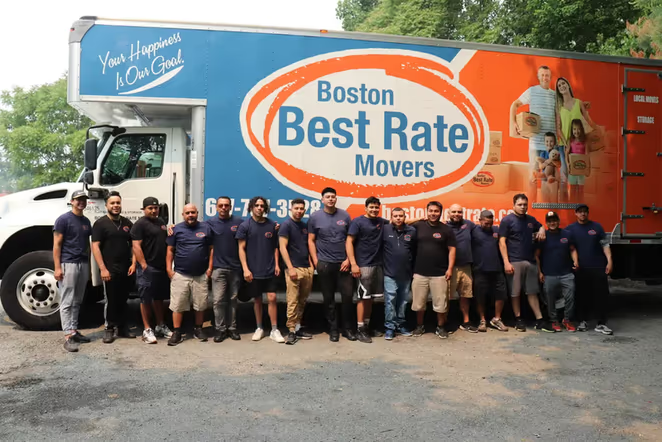
Boston Best Rate Movers has the trained crews and specialized equipment to handle gun safe moves safely throughout Greater Boston. Get in touch today for a free quote and move your safe without the risk.
Frequently Asked Questions
How heavy are most gun safes?
Most residential gun safes weigh between 200 and 1,200 lbs depending on size and fireproofing. Smaller bedside models can weigh under 100 lbs, while large rifle safes and commercial units often exceed 1,000 lbs.
How do you move a gun safe without sliding pads?
Plywood sheets and furniture dollies can work on hard floors in a pinch. Folded moving blankets under the safe reduce friction temporarily, but they're not reliable for heavier units. Gun safe moving sliders are always the better option.
How do you move a gun safe in a pickup truck?
Use a loading ramp and slide the safe onto the truck bed with a dolly. Strap it securely to the anchor points in the bed and position it over the rear axle for better weight distribution during transport.
Can you move a gun safe with an appliance dolly?
Yes, if the dolly is rated for the safe's weight. Most heavy-duty appliance dollies handle 800 to 1,200 lbs. For heavier safes, you'll need a reinforced dolly with larger wheels and industrial-grade straps.
Can two people move a gun safe?
Two people can manage safes under 400 lbs with the right equipment on flat ground. Anything heavier typically needs three or more people. The injury risk increases significantly with fewer helpers and greater weight.
How much does it cost to move a gun safe?
Safe moving cost typically ranges from $150 to $1,000 or more depending on weight, distance, and difficulty. Stairs and tight spaces add to the final price. Getting a direct quote from a reputable mover gives you the most accurate number.
Will moving a safe damage the lock?
It can. Gun safes contain precision locking systems sensitive to jarring and improper handling. Keeping the door locked and the safe upright throughout the move significantly reduces the risk of lock damage or misalignment.
Do I need to empty my gun safe before moving it?
Yes, always. Removing all firearms, ammunition, and loose shelving reduces overall weight and prevents dangerous shifting during transport. It's one of the most important safety steps in any gun safe move.
Can you move a gun safe on its side?
It's strongly discouraged. Most manufacturers recommend keeping safes upright during transport. Laying one on its side can stress the door hinges, shift the locking bolts, and damage internal components.
How do professionals move a gun safe upstairs?
Professionals use powered stair-climbing dollies, stair rollers, and winch systems built for heavy loads. These tools maintain controlled movement on every step and prevent the uncontrolled tipping that causes most stair-related injuries.


.jpeg)


.jpeg)