Residential Movers in Boston — Hourly Billing, No Stair Fees, Full-Time Crews
Full-service residential moving across Greater Boston starting at $149/hr for a two-man crew and truck. Since 2002, Boston Best Rate Movers has relocated over 33,000 households — from compact condos in the South End to sprawling estates in Newton and Wellesley.
Starting at $149/hr · 3-hour minimum · 15-min billing increments · No hidden fees
Get An Instant Online Quote
or call us at (617) 787-3528
Move your home within Greater Boston with hourly transparency, no stair fees, and a crew that knows every neighborhood's building quirks.
What Makes This Service Different
Residential moving in Boston means handling some of the most challenging housing stock in the country: triple-deckers with spiral staircases, brownstone walkups with 28-inch turns at every landing, Beacon Hill cobblestone streets where the truck can't park within 100 feet of the door, modern high-rise condos with strict freight-elevator windows, and historic neighborhoods where every doorway predates standard furniture dimensions. Boston Best Rate Movers has handled 33,158+ residential moves across Greater Boston since 2002, including every neighborhood from Allston to West Roxbury and every suburb from Arlington to Wellesley.
What makes our pricing different from most Boston movers: we charge by the hour with full transparency. Off-peak discount rates start from $149/hr (2-mover crew), $179/hr (3-mover), or $219/hr (4-mover), with a 3-hour minimum and 15-minute billing increments after that. No stair fees regardless of how many flights. No truck fees. No hidden costs added at the end. If your move comes in faster than estimated, you pay less. The advertised hourly rate is what you actually pay.
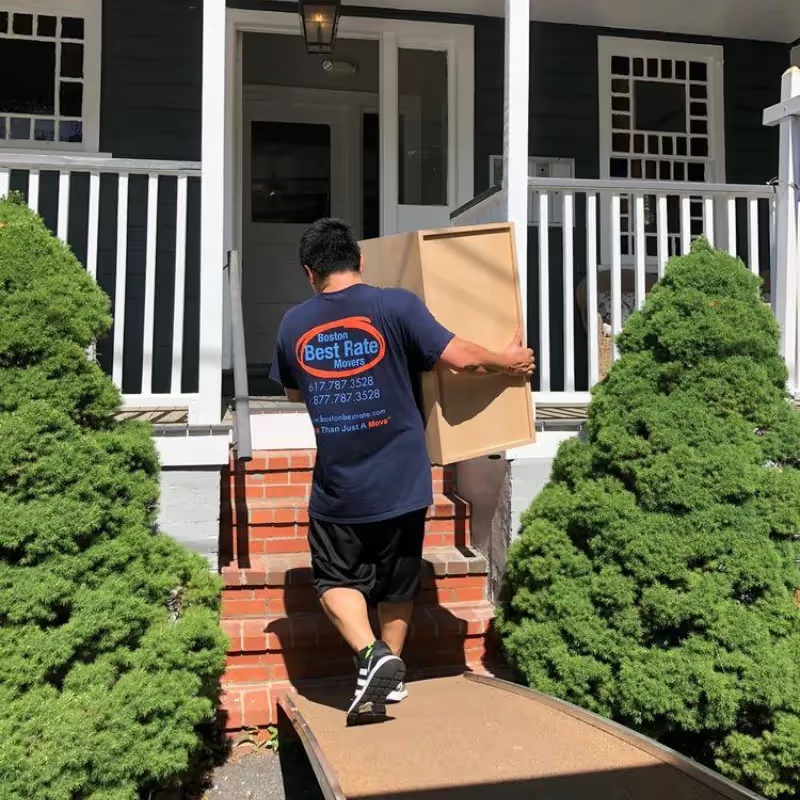
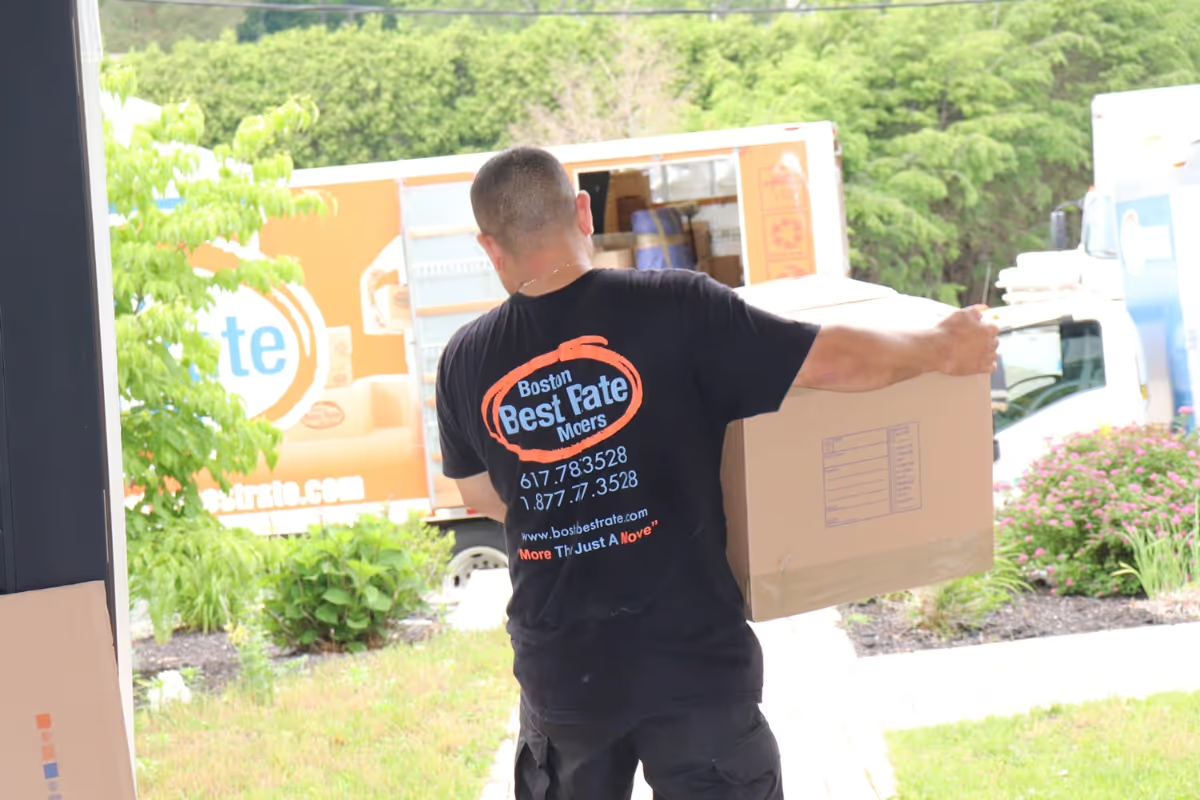
What residential customers value about our service: we send the right crew size for the job (we under-staff far less often than competitors who optimize for revenue rather than time), we never charge stair surcharges in a city built on walkups, we bring all standard equipment included (dollies, straps, blankets, plywood runners, corner protectors), and we handle the building logistics that catch other movers off-guard (COI documentation for high-rise condos, freight elevator reservations, parking permit advice, loading dock scheduling). Federal interstate authority (USDOT #1718049, MC #630047), Massachusetts state license (MDPU #31391), BBB accredited, AMSA ProMover certified, and $50,000 cargo insurance on every move. Full-time trained crews — never day laborers or temporary workers. 33,158+ completed moves since 2002 across Greater Boston. Whether you're moving a studio from Fenway to South Boston or a 4-bedroom from Cambridge to Newton, our crew brings the same care to your residential move.
33,158+
Residential moves completed
$0
Stair surcharges
Full-time, trained
Crew type
$50,000
Cargo insurance
About Residential Movers Boston
Full-service residential moving across Greater Boston starting at $149/hr for a two-man crew and truck. Since 2002, Boston Best Rate Movers has relocated over 33,000 households — from compact condos in the South End to sprawling estates in Newton and Wellesley.
Every residential move includes a dedicated crew leader who manages logistics from start to finish, padded moving blankets for all furniture, stretch wrap for upholstered pieces, and floor and banister protection at both the origin and destination. Our residential moving service covers every type of home in Greater Boston.
Unlike some movers who specialize only in houses or only in apartments, we handle the full spectrum of residential properties: high-rise condominiums, garden-style apartments, single-family homes, townhouses, triple-deckers, brownstones, and estate properties with basements and garages.
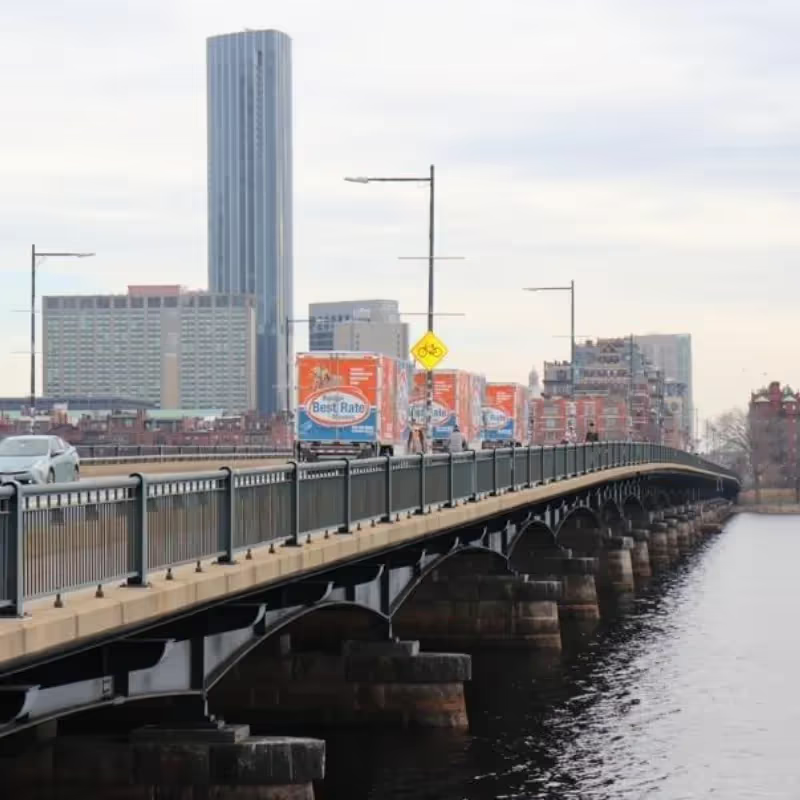
Whether you are moving from a Beacon Hill studio or a Newton colonial, our crew has the experience and equipment to handle it correctly. What sets our residential moving service apart is our crew model.
Every mover is a full-time W-2 employee — never a day laborer or temp worker hired off a platform. Our crews receive hands-on training before their first job and are supervised by experienced crew leaders on every move.
This means the people handling your furniture and personal belongings are professionals who take pride in their work and are accountable for the results. Our pricing is designed to be the clearest in the market.
Rates are $149/hr for two movers, $179/hr for three, or $219/hr for four, with a 3-hour minimum and 15-minute billing increments after that.
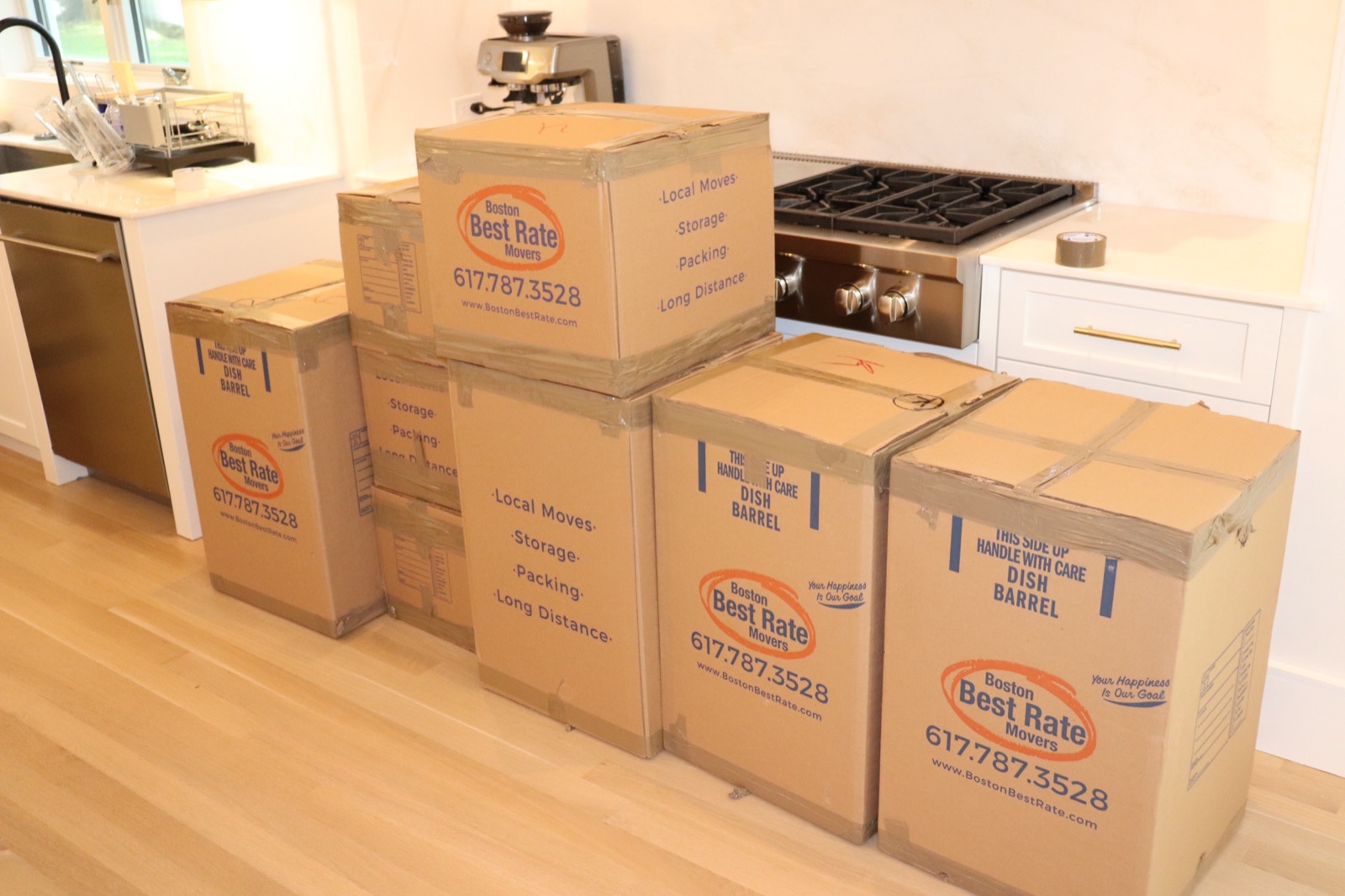
There are no stair fees, no truck fees, and no hidden charges of any kind. The hourly rate includes the truck, all moving equipment, padding and wrapping supplies, furniture disassembly and reassembly, and floor protection at both locations.
You will know your total before we leave your driveway. We are licensed under USDOT #1718049 and MDPU authority, and we carry full workers' compensation and cargo insurance on every job.
Every residential move includes basic released-value coverage, with optional full-value protection available for customers with antiques, art, or other high-value pieces. Our 807+ five-star Google reviews are a direct reflection of the consistent, careful service we deliver on every residential relocation across Greater Boston.
Everything You Need, No Add-Ons
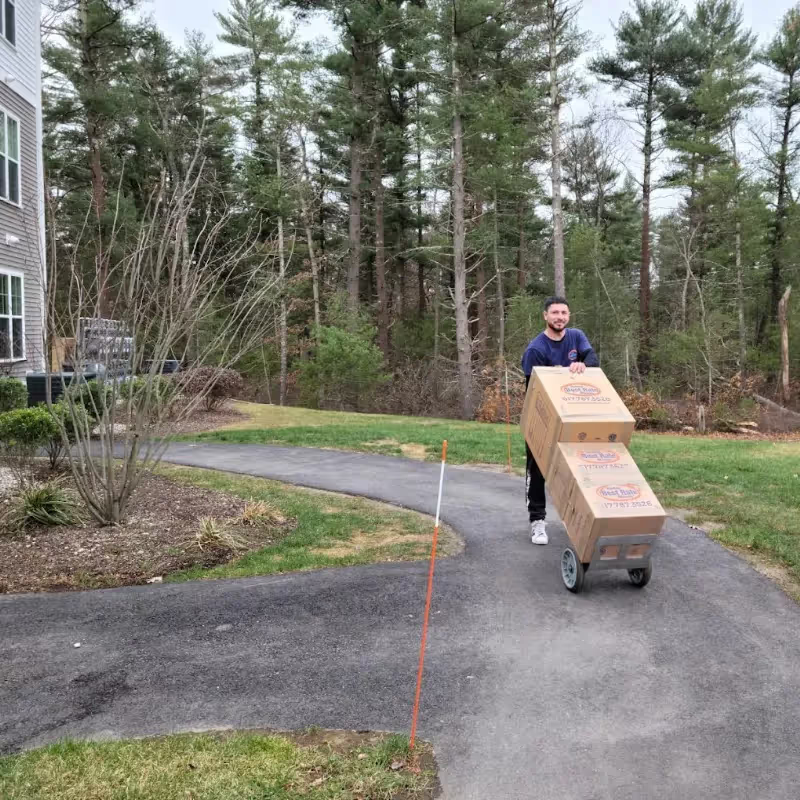
Every residential movers boston job includes these services at no extra charge. Our hourly rate covers it all — no surprise fees at the end.
How Your Move Works
Four easy steps from quote to your last box placed.
Instant Online Quote
Fill out our quick form or call us for a free, transparent hourly estimate. No hidden fees, no surprises — just honest pricing.
Book Online or By Phone
Book instantly through our secure client portal 24/7, or speak with our team to lock in your move date and crew.
We Show Up On Time
Your fully equipped crew arrives on schedule with the truck, blankets, dollies, and all supplies — ready to work.
Careful & Fast Move
We pack, protect, load, transport, and reassemble everything. Billed only for actual time in 15-minute increments.
Our Crew in Action
Real photos from real residential movers boston jobs in Greater Boston.
Transparent Pricing
Truck & equipment included · 3-hr minimum · No hidden fees
Boston's Most Trusted Moving Company
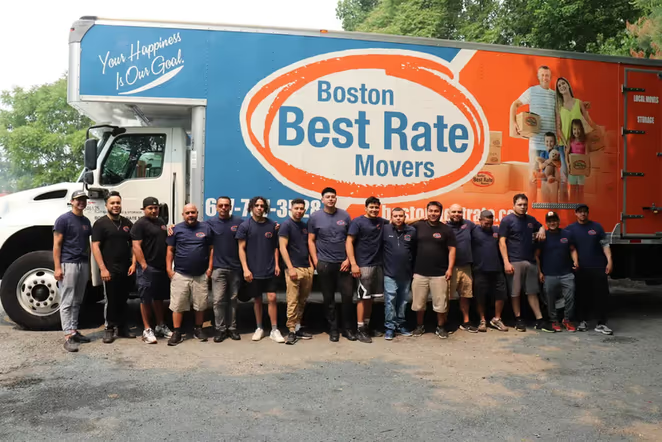
Since 2002, we've completed over 33,158 moves across Greater Boston. Our full-time, trained crews — not day laborers — treat every home like their own.
807+
5-Star Reviews
33,158+
Moves Completed
24
Years in Business
$0
Hidden Fees, Ever

807+ Google Reviews
Frequently Asked Questions
Common questions about our residential movers boston service.
Related Services
Specialized apartment moving across Greater Boston with deep expertise in walkups, narrow staircases, tight hallways, and elevator buildings. Since 2002, Boston Best Rate Movers has completed over 20,000 apartment relocations — from Back Bay brownstones with winding staircases to high-rise towers in the Seaport. Our crews start at $149/hr for two movers and a truck, with absolutely no stair fees or long-carry surcharges. Every apartment move includes padded blanket wrapping for furniture, doorframe protection to prevent dings, floor runners for hardwood and tile, and strategic truck loading to maximize space. No stair fees is the single most important differentiator when choosing an apartment mover in Boston. Most moving companies in the city charge $50-$75 per flight of stairs — a seemingly small addition that can turn into $300-$450 on a 4th-floor walkup building. At Boston Best Rate Movers, stairs are included in our standard hourly rate. Whether your apartment is on the ground floor or the 5th floor of a pre-war walkup, you pay the same $149/hr. This policy is unconditional — we do not add stair fees mid-job, after the estimate, or at checkout. Boston's apartment building stock is among the oldest and most architecturally diverse in the United States. Our crews work daily in pre-Civil War brownstones on Beacon Hill, narrow triple-deckers in Allston and Dorchester, converted Victorian homes in Cambridge and Somerville, and modern high-rise elevator buildings throughout the Seaport and Back Bay. We bring the right equipment for each building type: furniture dollies for long hallways, stair-climbing equipment for multi-flight walkups, furniture sliders for tight turns in narrow corridors, and custom padding for awkward angles in older buildings. September 1st is Boston's unofficial moving holiday — the single day when roughly 70% of all apartment leases turn over simultaneously. Traffic snarls, double-parked trucks, and frantic tenants make it the most chaotic day on the Boston real estate calendar. Our crews have been navigating September 1st successfully for over two decades by pre-planning routes, coordinating early-morning arrival windows, and communicating proactively with building management at both ends. We recommend booking your September 1st apartment move by June to guarantee availability. For elevator buildings, we coordinate directly with building management to reserve the service elevator for your move window, ensuring other residents are not inconvenienced and your crew can work efficiently without waiting. We bill in 15-minute increments after the 3-hour minimum — so elevator wait times don't inflate your bill unnecessarily.
Moving a single-family home is the largest and most complex type of residential relocation, and Boston Best Rate Movers has been handling whole-house moves across Greater Boston since 2002. Unlike apartment moves, which typically involve one or two rooms of furniture and personal belongings, a house move encompasses every level of the property — basements packed with holiday decorations and tools, main floors filled with full-size furniture and appliances, upper floors with bedrooms and closets, attics with stored items accumulated over years, and garages with equipment, seasonal gear, and workshop supplies. Our crews plan and execute these moves with the precision and organization that only comes from completing over 33,158 relocations. Greater Boston's housing stock presents specific challenges that our crews navigate daily. Colonial-style homes in Newton, Wellesley, and Needham often have narrow interior staircases connecting three or four levels, with tight turns at landings that require careful maneuvering of large furniture. Cape Cod style homes in Quincy and the South Shore have steep, cramped staircases leading to finished second floors with low ceilings. Victorian homes in Brookline, Cambridge, and Somerville feature ornate banisters, original hardwood floors, and narrow hallways that demand floor runners and banister padding. Ranch-style homes may be single-level, but they often have full basements and attached garages that double the effective square footage of the move. Our crews assess the layout of your specific home during the estimation process and plan crew size, truck capacity, and equipment accordingly. Multi-truck logistics are common for house moves. A typical three-bedroom colonial with a finished basement and garage requires 1,200 to 1,800 cubic feet of truck space — often more than a single 26-foot truck can accommodate. For larger homes, we dispatch two trucks and coordinate the loading so that items are organized by room and priority. The first truck is loaded and sent to the destination while the second truck continues loading at the origin, minimizing idle time and keeping the move on schedule. Our crew leaders manage the logistics of multi-truck moves daily and know exactly how to sequence the loading for maximum efficiency. Suburban streets in Greater Boston add their own complications. Many older neighborhoods in Arlington, Lexington, Winchester, and Concord have tree-lined streets with limited truck access, steep driveways, and cul-de-sacs that require careful navigation with a full-size moving truck. In winter, snow and ice add another layer of difficulty. Our drivers are experienced with every type of residential street in the Greater Boston suburbs and plan their approach before arriving. Every house move includes furniture disassembly and reassembly at no extra charge. Bed frames, dining tables, desks, shelving units, and sectional sofas are broken down for safe transport and rebuilt at your new home. All furniture is wrapped in padded blankets with corner protectors, and stretch wrap is applied to upholstered pieces to prevent dirt and damage. Floor protection is installed at both locations — hardwood runners, carpet protectors, and banister padding — to ensure your old and new homes are left in pristine condition. Our house moving rates start at $149 per hour for a two-person crew and truck, with three and four-person crews available at $179 and $219 per hour for larger homes. The three-hour minimum applies, with 15-minute billing increments after that. No stair fees, no hidden charges. We are licensed under USDOT #1718049 with full insurance coverage. With 807+ five-star Google reviews, Boston Best Rate Movers is the house moving company that families across Greater Boston trust for their most important relocations.
Trusted local moving company serving all of Greater Boston since 2002. Whether you are moving across the street, to a neighboring town, or to the other side of the metro area, Boston Best Rate Movers delivers reliable, damage-free local moving service at transparent hourly rates. Our base rate starts at $149/hr for a two-man crew and fully equipped truck, with 3-man crews at $179/hr and 4-man crews at $219/hr for larger jobs. Every local move includes furniture disassembly and reassembly, padded blanket wrapping for all items, floor protection at both locations, and a dedicated crew leader to manage logistics. What separates Boston Best Rate Movers from other local movers in Boston comes down to three things: our people, our pricing, and our policies. Every mover on our crew is a full-time, W-2 employee who undergoes training before their first job and works alongside experienced crew leaders. We never use day laborers, temp agency workers, or gig-economy hires — the crew that shows up at your door is the same quality team that completed 33,000+ moves before yours. This consistency in crew quality is why our customers leave 807+ five-star Google reviews. Boston is one of the most challenging cities in America for moving. Narrow one-way streets in Beacon Hill, limited loading zones in the South End, brick-paved alleys in the North End, and the infamous September 1st lease turnover — when up to 70% of apartments change hands on a single day — require local expertise that only comes from years of operating in this city. Our crews know which streets require parking permits, which buildings have freight elevator schedules, and which neighborhoods see enforcement sweeps. We handle all of this coordination so you don't have to. Our pricing policy is equally distinctive. Most Boston movers pad their invoices with stair fees ($50-$75 per flight), truck fees ($50-$100), and long-carry fees. We charge none of these. Our hourly rate covers the truck, all equipment, and every flight of stairs. Billing runs in 15-minute increments after the 3-hour minimum, so you are never rounded up to the nearest hour. If your move takes 3 hours and 15 minutes, you pay for 3 hours and 15 minutes. We are fully licensed and insured under USDOT #1718049 and MDPU authority, carrying workers' compensation and cargo insurance on every job. Every move includes basic released-value coverage at no cost, with optional full-value protection available for high-value items. Our Greater Boston service area spans 60+ communities from Andover in the north to Braintree in the south, and from Framingham in the west to East Boston across the harbor.
Boston Best Rate Movers provides complete full-home packing services for Greater Boston residents who want every item in their home professionally packed by trained crews before moving day. Our full-home packing service covers every room, every closet, every cabinet, and every drawer in your home. From the kitchen to the garage, from the attic to the basement, our packing crews systematically work through your entire property, wrapping, boxing, and labeling every item so it is ready for safe transport. This is the most comprehensive packing option we offer and the one that eliminates the stress of moving almost entirely. Our professional packing crews work three to five times faster than the average homeowner packing on their own. A two- or three-bedroom home that would take a family an entire weekend of frustrating, disorganized effort is completed by our trained team in a matter of hours. We bring all materials with us: double-walled corrugated boxes in every size, packing paper, bubble wrap, foam pouches for dishes and glassware, wardrobe boxes for hanging clothes, specialty cartons for mirrors and artwork, stretch wrap for upholstered furniture, and all the tape, labels, and markers needed to keep everything organized. Our room-by-room packing system ensures nothing gets missed and everything ends up clearly labeled for efficient unpacking at your destination. Each box is marked with its contents and the room it belongs to, so your crew at the other end knows exactly where every box goes. Fragile items receive extra attention: dishes are individually wrapped in packing paper, glassware gets foam pouches and cell dividers, artwork and mirrors are packed in telescoping picture boxes, and electronics are wrapped in anti-static materials. Full-home packing is typically scheduled for the day before your move, giving our crew an uninterrupted window to work through your home without competing with the movers for space. For larger homes or tight timelines, we can schedule packing for the morning of your move day with the moving crew arriving after packing is complete. We coordinate the timing so the transition is seamless. Every full-home packing job is covered by our cargo insurance, which means your belongings are protected from the moment our crew begins packing until everything is delivered and placed at your new home. Our packing rates start at $149 per hour for a two-person crew, with no stair fees, and no hidden costs. All packing materials are included in the service. With over 33,158 moves completed and 807+ five-star Google reviews since 2002, Boston Best Rate Movers has earned its reputation as the most reliable packing and moving company in Greater Boston. Licensed under USDOT #1718049 with full insurance coverage.
Available Across Greater Boston
We provide residential movers boston services throughout the Boston metro area and 335+ communities.
Ready to Book Your Residential Movers Boston?
Trusted by over 33,158 Boston families since 2002. Get your free, no-obligation quote today.