The short answer
Long-distance moving from Boston without the weight-quote games: hourly door-to-door pricing, one crew and truck, and the planning timeline.
Long-distance moving is where the industry's worst practices live: weight-based quotes that grow at the weigh station, brokers who sell your move to the lowest bidder, warehouse transfers where damage hides, and delivery windows measured in weeks. It doesn't have to work that way. Moving the other direction — into Boston from another state — has its own relocation guide. This is the complete guide to moving long-distance from Boston — how the pricing models really compare, the one-crew-one-truck alternative, a planning timeline, packing differences for the long haul, the state-by-state corridors we run, and the administrative checklist for changing states.
How Long-Distance Pricing Really Works
- Weight-based (the industry standard): your goods are estimated, loaded, and weighed; the final price follows the scale. The problems: you can't verify the estimate, "non-binding" means the number can grow 10%+, and disputes happen with your furniture on their truck.
- Cubic-foot pricing: worse — volume is even easier to inflate after loading.
- Brokers: the worst — you book with a sales site that auctions your move to whichever carrier bids lowest. Accountability evaporates at handoff.
- Hourly door-to-door (our model): the same transparent clock as a local move — $149–$219/hr by crew size — with drive time quoted in writing up front. We never price long-distance by weight. You see the full door-to-door number before booking, and the crew that loads in Boston is the crew that unloads at the destination.
One Crew, One Truck: Why It Changes Everything
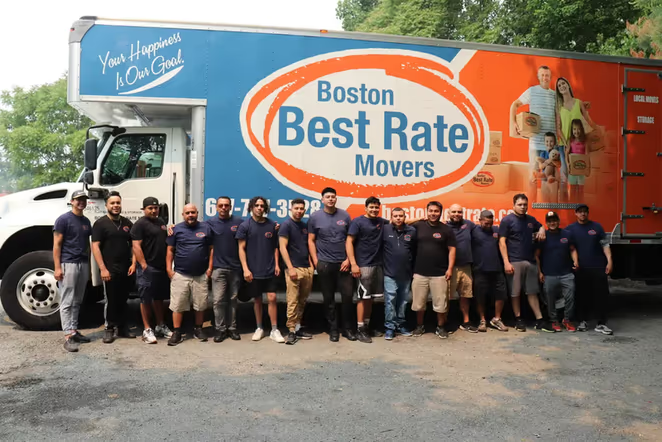
The traditional van-line model consolidates your home with strangers' homes into a tractor-trailer, often through a warehouse cross-dock, with delivery "windows" of 2–21 days. Every transfer is a damage-and-loss opportunity; every consolidation makes your delivery date someone else's variable. The dedicated-truck model — your goods, our truck, the same crew door to door — costs honestly and delivers on a date, not a window: load in Boston in the morning, unload in New York the same day, or Philadelphia, D.C., or anywhere on the Eastern corridor on a planned schedule. No cross-docks, no strangers' boxes, no "your stuff is somewhere in Ohio."
The Corridors We Run From Boston
Our regular long-distance lanes, each with its own guide: New York (the most-traveled lane in America), Connecticut, New Jersey, Pennsylvania, Florida (the retirement-and-remote-work river), and California. We also run the shorter New England lanes in both directions, including New Hampshire-to-Boston movers. Cross-country moves are planned as multi-day dedicated runs — same crew the whole way. For everything in between, our long-distance page covers the service; licensing for interstate work is USDOT #1718049.
The Planning Timeline
- 6–8 weeks out: book the mover (long-distance schedules block out earlier than local — see booking lead times), confirm the destination date chain (lease start, closing), and start the declutter — every pound you don't move matters more with every mile.
- 4 weeks out: begin packing non-essentials; arrange kids' school records and pet logistics (pets ride with you, never in the truck); book your own travel.
- 2 weeks out: address changes (below), utility stops and starts, refill prescriptions, confirm parking/elevator at both ends — destination buildings have rules too.
- Move week: finish packing to the checklist, set aside the essentials that travel with you (documents, medications, chargers, two days of clothes), and confirm final details with dispatch.
Packing for Distance: What Changes
A long-haul box lives through hundreds of miles of vibration, so pack to a higher standard: no half-full boxes (stuff every gap — shifting is the long-distance killer), double-tape bottoms, double-wrap fragiles, and band furniture blankets tight. Three categories deserve special handling: electronics (original boxes or the TV method, photographed before disconnection), the essentials kit that rides in your car (documents, valuables, medications — never on the truck), and climate-sensitive items (candles, vinyl, wine — your car or climate planning, especially southbound in summer). Full-home packing service exists for exactly this standard: we pack, you drive.
The Changing-States Checklist
The move is half the job; the administration is the other half. Within your first weeks: driver's license and vehicle registration (most states allow 30–60 days), voter registration, insurance re-quotes (auto rates change by state — sometimes dramatically), updating your address with USPS (forwarding), banks, employer/payroll (state tax withholding!), IRS (Form 8822 eventually), subscriptions, and professional licenses if your work requires them. Healthcare deserves early attention — transferring prescriptions and finding in-network providers takes longer than anything on this list.
Long-Distance FAQ
How much does a long-distance move from Boston cost?
Hourly rate × realistic door-to-door time, quoted in writing. Boston-to-NYC 2-bedroom moves typically land $1,800–$2,800 as same-day dedicated runs; longer lanes scale with drive time, not weight. Get your written number — and compare it line-by-line against any weight-based quote, including their fee schedule.
How long will my furniture take to arrive?
With a dedicated truck: the same day for Northeast corridors, scheduled days for longer runs. There is no "delivery window" — there's a date.
Can you store everything if my new place isn't ready?
Yes — load once, hold in our climate-controlled Waltham warehouse, deliver when you have keys. The mechanics are in our storage guide.
Should I empty drawers for a long-distance move?
Yes — unlike short local moves where light drawer contents can sometimes stay, distance means vibration, and empty furniture travels safer and lighter.
Moving out of Massachusetts? Get the dedicated-truck quote before you accept a weight-based one — free, written, door-to-door. 1,244+ Google reviews, USDOT #1718049, and the same crew at both doors.
Find our moving guides faster on Google
Add Boston Best Rate Movers as a preferred source and Google shows our answers first when you search — including in AI Mode.

Boston Best Rate Movers
The Boston Best Rate Movers team shares moving tips, Boston neighborhood guides, and cost-saving strategies drawn from 24+ years and 43,126+ completed moves across Greater Boston.
See All Posts