The short answer
Everything to do before moving in: the utilities cascade, lock changes, the empty-house deep clean, and a 72-hour unpacking strategy.
The week between getting keys and moving in is the most valuable week of your entire move — the only time you'll ever see the place empty. Everything on this checklist is ten times easier with no furniture in the way, and most of it is impossible to prioritize once you're living in a maze of boxes. Here's the complete before-you-move-in sequence: utilities and services, the empty-house tasks worth doing first, the unpacking strategy that gets you functional in days instead of months, and the settling-in moves that turn an address into a neighborhood.
Two Weeks Before: The Utilities Cascade
Set up everything that requires an appointment or a mailing first:
- Electricity and gas: schedule the account transfer for the day before move-in (Eversource and National Grid cover most of Greater Boston). Never let the previous account close before yours opens — re-connection beats activation fees and cold showers.
- Internet: the long pole — installation appointments in Boston can run 1–2 weeks out, and buildings sometimes restrict providers. Order as soon as you have keys-date certainty; work-from-home without internet is a hotel-lobby week.
- Water/sewer and trash: renters usually inherit these through the building; buyers transfer accounts at closing and should learn the trash/recycling day immediately (Boston's schedule varies by neighborhood — and bulk-item pickup needs advance scheduling; relevant when the old furniture doesn't make the cut: here's that process).
- Mail forwarding: USPS change-of-address a week ahead, dated to move day. Then the real address-change list (banks, employer, insurance, subscriptions) over the following weeks.
- Renter's/homeowner's insurance: active on day one — most Boston landlords require proof before handing over keys anyway.
The Empty-House Window: Do These Before the Furniture Arrives
- Change the locks (or rekey). You have no idea how many copies of the old keys exist. Owners: rekeying is cheap. Renters: ask the landlord — many will, some require it stay official.
- Deep-clean once, properly. An empty clean takes hours; a furnished clean takes forever and misses everything. Floors, cabinets inside and out, bathroom, fridge. Hiring it out the day before move-in is money well spent.
- Walk it with your phone. Photograph every room, every existing scuff and chip — renters, this is your security deposit's evidence file; timestamped photos beat memories in every dispute.
- Find the three shutoffs: water main, electrical panel, gas valve. The moment you need them is not the moment to search.
- Test the safety gear: smoke and CO detectors (Massachusetts requires both), and replace batteries on day zero so the 3am chirp never happens.
- Paint and repairs now, if ever. Painting an empty room is a pleasure; painting around a sectional is a punishment. Even just the bedrooms.
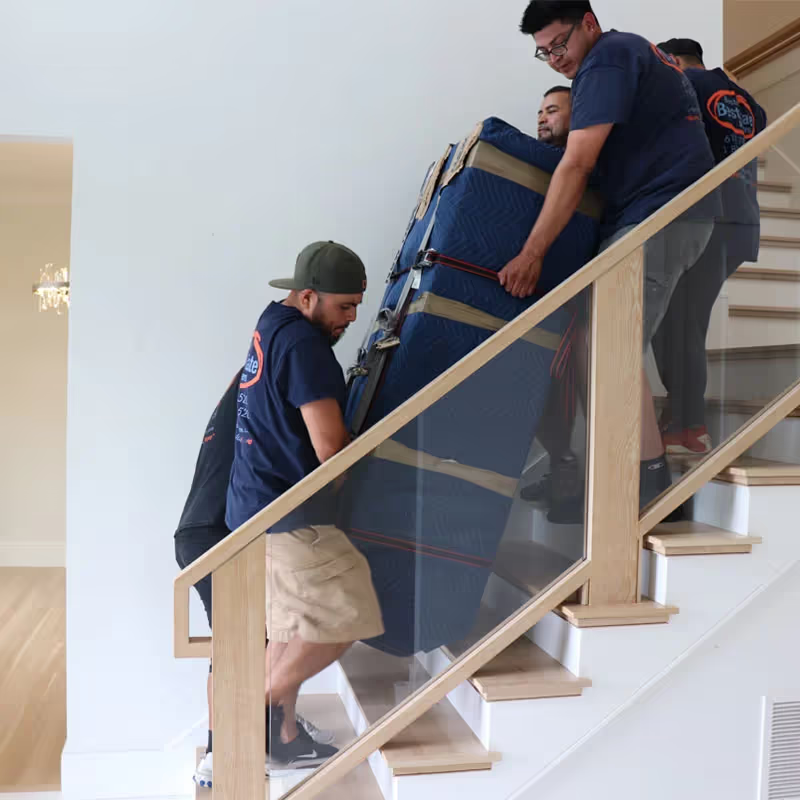
- Plan the furniture before it arrives: measure rooms, decide the layout, and tape door-frames that look tight — your crew places everything once instead of shuffling it twice. (Tell us the plan and placement is part of the move — included in the hourly rate.)
Move-In Day: Set Up for the Unpack
Three boxes get opened first, so pack them last and label them loud: the essentials box (toilet paper, soap, towels, chargers, basic tools, shower curtain — the classic forgotten item), the first-night kit (sheets, pajamas, toiletries, coffee setup), and the kitchen-starter box (kettle, two plates, two mugs, utensils, sponge). Beds get assembled before the crew leaves — it's part of the job — because whatever else happens, night one ends in a real bed.
The Unpacking Strategy: Functional in 72 Hours
Unpack in order of life-impact, not box-proximity:
- Day 1: bedrooms and bathroom. Sleep and showers make everything else possible.
- Day 2: kitchen. Once you can cook, you've stopped camping. Shelf-line, then unpack by zone (everyday dishes near the dishwasher, pots near the stove).
- Day 3: living room + the work setup. WFH desk before decor.
- The long tail: books, art, storage, garage — one box-free zone per week. Two rules keep it moving: flatten every emptied box immediately (visible progress is motivation), and anything unopened after a month goes to the donate pile — the move just told you what you don't need.
Becoming a Neighbor (the Underrated Checklist)
The first month sets the tone: introduce yourself to the immediate neighbors (in a triple-decker, the people who share your stairwell matter), learn the parking rules before the first ticket (resident permits in Boston require proof of residency — another week-one errand), find your essentials (pharmacy, grocery, hardware store, the good coffee), and register with a new doctor and dentist before you need one. If you've landed in a new neighborhood entirely, our Boston neighborhoods guide doubles as a what's-around-you orientation.
Before-You-Move-In FAQ
What's the single most important thing to do before moving in?
Internet scheduled and locks changed. One protects your week; the other protects everything else.
Should I clean before or after moving in?
Before, always — empty rooms clean in a fraction of the time. Budget a cleaner the day before move-in if you can't do it yourself.
How long should unpacking take?
Functional (sleep, shower, cook, work) in 72 hours with the strategy above. Fully done: give yourself a month without guilt — then enforce the unopened-box rule.
Want the move itself to land softly? Crews that assemble the beds, place furniture to your plan, and leave you set up to unpack — get your free quote. 1,244+ Google reviews, since 2002.
Find our moving guides faster on Google
Add Boston Best Rate Movers as a preferred source and Google shows our answers first when you search — including in AI Mode.

Boston Best Rate Movers
The Boston Best Rate Movers team shares moving tips, Boston neighborhood guides, and cost-saving strategies drawn from 24+ years and 43,126+ completed moves across Greater Boston.
See All Posts.avif)