The short answer
How to move heavy furniture safely: the equipment that matters, the full couch playbook, tight-space technique, and the honest DIY-vs-pro line.
Heavy furniture is where moves go wrong — thrown-out backs, gouged floors, doorframe dents, and the couch that gets stuck at the turn of the stairs. After 33,000+ moves, our crews have a system for every heavy piece in a home, and this guide shares it: the equipment that actually matters, the techniques for each furniture type (including the full couch playbook), how to navigate tight Boston spaces, and the honest line between a safe DIY job and one worth hiring out.
The Equipment That Actually Matters
- Furniture sliders ($10–$20): plastic for carpet, felt for hardwood. They turn dragging into gliding and protect floors — the single best dollar-for-dollar tool.
- Moving straps (shoulder or forearm) ($25–$40): they shift weight from your hands and lower back to your legs and shoulders. Two people with straps can carry what three struggle with bare-handed.
- A proper dolly: a hand truck for stacked boxes and appliances; a four-wheel furniture dolly for dressers and sofas. Rentable for cheap.
- Moving blankets + stretch wrap: blankets protect the piece, wrap holds the blanket and keeps drawers and doors shut.
- Basic tools: most heavy furniture moves better as parts — legs off the couch, mirror off the dresser, bed fully broken down.
Technique 101: Lift With Your Legs, Plan With Your Head
Everyone knows "lift with your legs"; the part that prevents injuries is what comes before the lift. Walk the route first — every doorway, turn, and stair, measured against the piece. Clear it completely. Decide where the piece is going before you pick it up. Keep the load close to your body, never twist mid-carry (move your feet instead), and agree on simple calls with your partner: "stop," "down," "your way." Most furniture injuries happen in the last ten feet, when people rush.
The Couch Playbook
Couches are the most-asked-about item in moving, so here's the full sequence our crews use:
- 1. Measure first. Couch height and depth versus door width; diagonal depth matters more than length — most couches pass through a 30-inch door on the diagonal.
- 2. Strip it. Cushions off and bagged, legs unscrewed (check for hidden screws under fabric), recliner mechanisms locked, sleeper-sofa mattresses strapped so the bed frame can't spring open mid-carry.
- 3. Wrap it. Blanket first, stretch wrap over — protects fabric from grime and door frames from corners.
- 4. The vertical trick. When a couch won't pass a doorway flat, stand it on end and pivot it through in a C-motion — one person guiding, one bearing weight. This solves 80% of "it doesn't fit."
- 5. Know when it truly doesn't fit. Some Boston walk-ups simply won't pass a modern sleeper sofa. The options become: window/balcony hoisting (professional job, full stop) or disassembly by a furniture tech.
Tight Spaces: The Boston Specialty
Triple-decker staircases with low ceilings at the turn, brownstone doorways built for 1890s furniture, basement bulkheads — tight-space moving is its own skill:
- Remove everything removable — interior doors off hinges buy 1.5–2 inches; so does removing the door's stop molding for one stubborn pass.
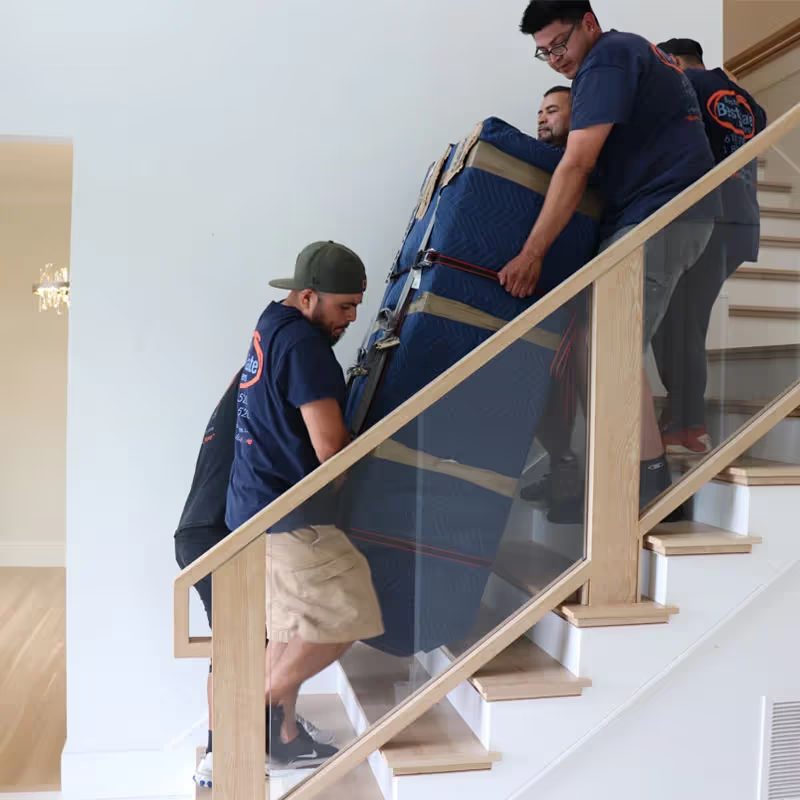
- High-low carries on stairs: the lower person bears the weight, the upper person steers. The piece travels at a diagonal matching the staircase angle.
- Pad the pinch points, not just the piece — taped moving blankets on banisters and corners prevent the wall repairs that eat security deposits.
- Use geometry before muscle: rotate, tilt, and approach at angles. If you're forcing, you're about to break something — back out and re-plan.
For the specific science of stairs — including walk-up strategy floor by floor — see our companion guide to getting heavy furniture upstairs.
Piece-by-Piece Quick Reference
- Dressers: drawers out (carry separately) or wrapped shut for short carries; mirror always comes off.
- Beds: full disassembly, hardware bagged and taped to the headboard. Box springs are awkward, not heavy — they steer the route plan.
- Appliances: doors strapped, cords taped, hand-truck from behind, never laid flat (refrigerators need their compressor oil where it belongs). Our appliance guide covers each machine.
- Marble and glass: never flat — always on edge, padded, and transported on edge as well.
- Pianos and safes: these are not furniture; they're rigging jobs with their own physics. See the piano guide and gun safe guide — and genuinely consider pros for these two.
DIY or Hire It Out? The Honest Line
DIY makes sense when: pieces are under ~150 lbs, access is simple, and you have two fit adults plus the equipment above. Hire professionals when: anything exceeds 200 lbs, stairs plus weight combine, the piece is high-value, or the building has liability rules (most Boston elevator buildings require a mover's certificate of insurance — we provide them free). A 2-mover crew at $149/hr with a 3-hour minimum handling just your heavy pieces — while you move the boxes yourself — is a popular hybrid that protects your back and your security deposit. We'll even move a single item.
Heavy Furniture FAQ
How heavy is too heavy for two people?
With straps and clear access, two trained movers handle 300+ lb pieces routinely. For untrained lifters, 150 lbs with stairs involved is a sensible ceiling.
How do movers get furniture up narrow Boston staircases?
Measurement, disassembly, door removal, high-low technique, and padding — in that order. Forcing is never on the list.
What does it cost to have movers handle only the heavy items?
The 3-hour minimum applies: $447 with 2 movers covers a typical heavy-items-only visit including travel. Get a free quote with your item list for a real number.
No stair fees, full padding included, 1,244+ Google reviews — if the heavy stuff is the part of moving you dread, that's literally our day job. Get your free quote.
Find our moving guides faster on Google
Add Boston Best Rate Movers as a preferred source and Google shows our answers first when you search — including in AI Mode.

Boston Best Rate Movers
The Boston Best Rate Movers team shares moving tips, Boston neighborhood guides, and cost-saving strategies drawn from 24+ years and 43,126+ completed moves across Greater Boston.
See All Posts.avif)